Moisture is the silent enemy of any flooring project. Whether you are looking at residential Garage Floors or large-scale Industrial Floors, excessive moisture vapor can cause coatings to bubble, peel, and fail prematurely. Understanding how to address moisture-related issues in concrete slabs is essential before you invest in a high-quality coating.
In this guide, we will explore why moisture happens, how to test for it, and the best ways to protect your investment.
Why is Moisture a Problem for Concrete Coatings?

Concrete may look solid, but it is actually a porous material, much like a hard sponge. It can pull moisture from the ground through a process called capillary action. When you apply a non-porous coating like epoxy or polyaspartic over a damp slab, that moisture vapor gets trapped. As the vapor tries to escape, it creates pressure that can literally push the coating off the concrete.
This is a common challenge for Commercial Floors in older buildings, where a vapor barrier may not have been installed under the slab. To see how different coatings handle these environments, read our comparison of Polyaspartic vs Epoxy: Comparing Durability, Cost, and Performance.
How to Identify Moisture Issues

Before you start any project, you need to know what you’re dealing with. Here are a few signs that you might have a moisture problem:
- Efflorescence: A white, powdery substance on the surface of the concrete.
- Damp Spots: Areas of the floor that appear darker than others, even when it hasn’t rained.
- Spalling: The concrete surface is flaking or peeling.
- Musty Odors: A sign that moisture is trapped and potentially causing mold growth.
If you’ve noticed these signs, it’s vital to have a professional moisture test performed. We discuss the importance of this in our article on Why Professional Garage Floor Coating Installation Delivers Better Results.
How to Fix Moisture in Concrete Slab Issues

Fixing moisture isn’t just about drying the surface; it’s about managing the vapor pressure.
1. Improve Drainage
Sometimes the moisture comes from outside. Ensure that gutters and downspouts are directing water away from your garage or building foundation.
2. Use a Moisture Vapor Barrier
For slabs with high moisture readings, a specialized moisture-mitigating primer is required. These primers are engineered to withstand high levels of vapor pressure and provide a solid foundation for your topcoats. This is a key step we cover in our Complete Guide to Garage Floor Coatings: Types, Benefits, and Installation.
3. Professional Diamond Grinding
Opening up the “pores” of the concrete through diamond grinding allows the moisture-mitigating products to penetrate deep into the slab, creating a much stronger bond than simple acid etching ever could.
How to Choose the Right Coating for Damp Environments
Not all coatings are created equal when it comes to moisture. While epoxy is a great all-around choice, some modern polyurea systems offer better breathability or faster cure times in humid conditions. You can compare your options in our post: Polyurea vs Epoxy: Which Garage Floor Coating is Right for You?.
If you are worried about the Lifespan of Your Epoxy Garage Floor, addressing moisture first is the only way to ensure your floor lasts for the long haul.
Protect Your Total Garage Environment
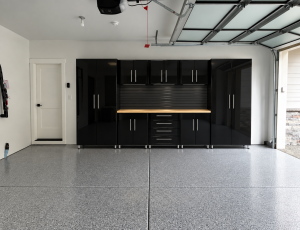
Managing moisture isn’t just about the floor; it’s about the whole space. High humidity can also damage your belongings. Installing Garage Cabinets that are raised off the floor can help protect your tools and gear from dampness. This is a smart move if you plan to Transform Your Garage into a Workshop, Gym, or Showroom.
For those planning a project in 2025, it’s also helpful to understand the Garage Floor Installation Cost, as moisture mitigation can sometimes add to the initial investment but saves significant money in the long run by preventing floor failure.
So, What’s the Takeaway?
Moisture in your concrete slab doesn’t have to mean the end of your flooring dreams. By identifying the source, using the right mitigation techniques, and choosing the Best Garage Floor Coating Options, you can achieve a beautiful, durable finish that stands the test of time.
Don’t let moisture ruin your new floor. Contact Integrity Garage Floors today for a professional moisture assessment and a free estimate. Let us help you build a floor that is protected from the ground up!