You invested in a beautiful epoxy garage floor, and now you want to keep it that way. The good news is that epoxy floor maintenance is straightforward when you know what to do and, just as importantly, what to avoid. A properly maintained epoxy floor can look showroom-fresh for 15 years or more.
Here is everything you need to know to protect your investment and keep your floors performing at their best.
Why Maintenance Matters

Epoxy coatings are built tough. They resist chemicals, impacts, stains, and heavy loads that would destroy bare concrete. But tough does not mean indestructible. Neglecting basic upkeep allows dirt, grit, and chemicals to wear down the surface over time, dulling the finish and shortening the lifespan of your coating.
The difference between an epoxy floor that lasts five years and one that lasts fifteen often comes down to how well it is maintained. If you are curious about how well epoxy floors hold up in real-world conditions, we covered the topic in depth.
Your Epoxy Floor Maintenance Schedule
Staying on top of your floor does not require much time. Here is a simple schedule that keeps things manageable:
| Task | Frequency | Why It Matters |
|---|---|---|
| Sweep or dust mop | Weekly | Removes grit that scratches the surface over time |
| Damp mop with mild cleaner | Bi-weekly | Lifts oil, dirt, and stains before they set |
| Spot clean spills | As needed | Prevents chemical damage and staining |
| Inspect for chips or wear | Quarterly | Catches small issues before they become big repairs |
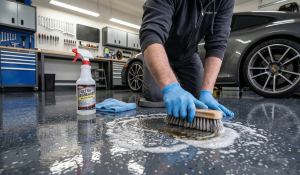
| Deep clean with a soft brush | Every 3–6 months | Restores shine and removes embedded dirt |
Cleaning Do’s and Don’ts

Getting the cleaning right is simple, but a few common mistakes can cause real damage.
Do
- Use a soft-bristle broom or microfiber dust mop for regular sweeping. These pick up fine grit without scratching.
- Mop with warm water and a mild, pH-neutral cleaner. A small amount of dish soap or a dedicated floor cleaner works perfectly.
- Wipe up automotive fluids immediately. Brake fluid, antifreeze, and gasoline can soften or discolor epoxy if left sitting.
- Place mats at entry points. This catches road salt, sand, and moisture before they reach the coated surface.
Don’t
- Never use abrasive pads or steel wool. These will permanently scratch and dull the finish.
- Avoid harsh chemicals like bleach, ammonia, or acidic cleaners. They break down the epoxy resin over time.
- Do not pressure wash at close range. High-pressure water can damage the top coat. If you do pressure wash, keep the nozzle at least 12 inches from the surface and use a wide fan tip.
- Skip the vinegar. Although it’s a popular home cleaning hack, vinegar is acidic and can degrade epoxy over time.
How to Handle Common Garage Floor Challenges

Hot Tire Pickup
When you park a car on an epoxy floor, the heat from the tires can sometimes cause marks or slight lifting on lower-grade coatings. Professional-grade garage floor coatings are specifically formulated to resist hot tire pickup. If you notice marks, a damp mop usually removes them. Persistent marks may indicate that the original coating was not rated for hot tire contact, a common issue with DIY epoxy kits.
Moisture and Humidity
Pacific Northwest garages experience constant moisture cycling, which puts stress on any floor system. Condensation, rain tracking, and humidity fluctuations can all affect your coating. We wrote extensively about why Pacific Northwest garage floors face unique challenges and how the right system handles them. Keeping your garage ventilated and wiping up standing water goes a long way toward preventing issues.
Scratches and Minor Damage
Small scratches from dragging tools or equipment are inevitable over time. Light surface scratches usually do not affect performance and can often be buffed out. For deeper chips or gouges, it is best to have a professional assess whether a spot repair or recoat is needed. Check our warranty information to see what is covered.
When to Call a Professional
Most epoxy floor maintenance is a simple DIY task. But there are times when expert help makes sense:
- The coating is peeling, flaking, or delaminating. This usually signals a preparation or adhesion issue that needs professional correction.
- You see widespread discoloration or cloudiness. UV exposure or chemical damage may require a full recoat.
- Cracks in the concrete are showing through. Structural movement beneath the coating needs to be addressed before resurfacing.
If your floor was originally installed by professionals using quality materials, these problems are rare. That is why choosing the right installer from the start is so critical to long-term performance.
Keep Your Floors Looking Their Best for Years to Come
Epoxy floor maintenance is not complicated, but it is essential. A few minutes of regular care protects the thousands of dollars you invested in your garage floor and keeps it looking sharp year after year. The combination of a quality coating system, professional installation, and consistent upkeep is what separates floors that last a lifetime from floors that fail in a few short years.
Want expert advice on maintaining your epoxy floor, or ready to upgrade to a coating that is built to last? Contact Integrity Garage Floors today for a free consultation. From first install to long-term care, we are here to make sure your garage floor stays beautiful and bulletproof.