When it comes to upgrading your concrete floors, two options consistently stand out: epoxy coatings and stained concrete. Both can dramatically transform a dull gray slab into something you are actually proud of. But beneath the surface, these two finishes could not be more different in terms of durability, protection, and long-term value.
If you are trying to decide between epoxy and stained concrete for your garage, workshop, or commercial space, here is a clear, honest breakdown to help you choose.
Epoxy vs Stained Concrete: Side-by-Side Comparison
| Feature | Epoxy Floor Coating | Stained Concrete |
|---|---|---|
| Durability | Very high – resists impacts, abrasion, and heavy loads | Low to moderate – surface remains exposed concrete |
| Chemical Resistance | Excellent – repels oil, gasoline, and solvents | Poor – stains and etches from chemicals |
| Moisture Protection | Full barrier – seals and protects the slab | None – stain penetrates but does not seal |
| Slip Resistance | Customizable with anti-slip additives | Limited – can be slippery when wet |
| UV Stability | High (especially polyaspartic systems) | Moderate – colors may fade in sunlight |
| Maintenance | Easy – sweep and damp mop | Higher – requires periodic resealing |
| Lifespan | 10–20+ years with professional installation | 5–10 years before reapplication is needed |
| Appearance | High-gloss, matte, or metallic options with flake blends | Natural, earthy, translucent tones |
The table tells a clear story. Stained concrete looks great, but epoxy coatings protect, perform, and last significantly longer.
What Is Stained Concrete?
Stained concrete uses acid- or water-based stains that penetrate the slab’s surface and react with the minerals within to create color. The results can be beautiful, with rich, variegated tones that look natural and unique to each floor.
But here is the key thing to understand: staining is cosmetic only. It changes the color of the concrete but adds zero protection. The surface is still raw concrete. It still absorbs moisture, oil, and chemicals. It still chips, cracks, and dusts. To get any level of protection, you have to apply a separate sealer on top, which wears down and needs reapplication every few years.
What Makes Epoxy Different

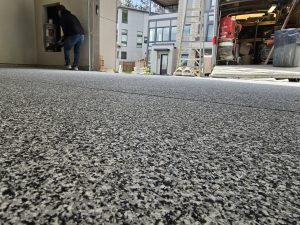
An epoxy floor coating is a multi-layer protective system that bonds to the concrete at a molecular level. It creates a seamless, impermeable surface that shields the slab from everything your garage throws at it, including hot tires, chemical spills, impacts, and constant foot and vehicle traffic.
Professional epoxy systems also offer far more design flexibility than most people realize. Between solid colors, metallic finishes, and decorative flake blends, you can achieve any look from sleek and modern to bold and textured. Browse our floor color options to see the full range.
And when it comes to performance in demanding environments, epoxy is in a completely different league. That is why it is the standard for commercial and industrial floor coating applications where failure is not an option.
Where Stained Concrete Falls Short
Stained concrete has its place. It works well in interior living spaces, retail environments, and decorative patios where the floor is not subjected to heavy abuse. But in a garage or workspace, the limitations become problems fast:
- No chemical protection. A single oil leak or antifreeze spill can permanently discolor stained concrete. Epoxy shrugs it off with a quick wipe.
- No moisture barrier. In the Pacific Northwest, moisture cycling is a constant issue. Stained concrete absorbs water from below and above, leading to efflorescence, mold, and surface damage. We have written extensively about why Pacific Northwest garages face unique challenges that demand real protection.
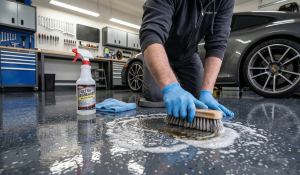
- Higher long-term maintenance. The sealer over stained concrete wears out and needs to be stripped and reapplied. Epoxy maintenance is far simpler, just regular sweeping and the occasional damp mop.
- No impact resistance. Drop a wrench or roll a heavy toolbox across stained concrete, and the surface chips. Professional epoxy handles those impacts without a mark.
Why Professional Installation Matters for Both

Whether you go with epoxy or stained concrete, the quality of the installation determines the result. For epoxy in particular, proper surface preparation through diamond grinding or shot blasting is what creates the mechanical bond that makes the system last.
We have seen countless floors fail because corners were cut during installation. Our detailed guide on why professional installation delivers better results explains exactly what goes into the process and why it matters. You can also see real-world results in our project gallery.
How to Make the Right Choice for Your Space
If your priority is pure aesthetics in a low-traffic interior space, stained concrete can be a fine option. But if you need a floor that looks great and performs under real-world conditions, protects your concrete from damage, resists chemicals and moisture, and lasts for years with minimal upkeep, epoxy is the clear winner.
For garages, workshops, commercial kitchens, retail spaces, and any area that sees serious use, a professionally installed epoxy or polyaspartic coating system delivers the durability and protection that stained concrete simply cannot match.
The Takeaway: Choose a Floor That Works as Hard as You Do
Your garage floor should not just look good on day one. It should look good and perform flawlessly for years to come. Epoxy and polyaspartic coatings give you the complete package: stunning appearance, unmatched protection, and a lifespan that makes the investment worthwhile. Stained concrete may catch your eye, but when it comes to standing up to the demands of a real working garage, there is no contest.
Ready to see what a professional coating can do for your space? Contact Integrity Garage Floors today for a free consultation. We will help you choose the perfect system for your garage and deliver a finish that lasts.